Table of contents
- The shift from events to continuous communication channels
- Why ad-hoc live communication has reached its limits
- Programmatic thinking: fixed rhythm, fixed infrastructure
- The role of the studio as a stable core
- From individual webinars to thought leadership programs
- Data, governance and compliance as prerequisites
- Analytics as a learning tool within a live communication program
- One ecosystem, multiple contexts
- From supplier to structural partner
- A logical step for organizations that want to move forward
- Translating this into practice
- Frequently asked questions about structural live communication
The shift from events to continuous communication channels
Live communication has changed significantly in recent years. Where organizations previously organized an occasional webinar or live event, live communication has now become a fixed part of their communication mix.
For knowledge-driven organizations, consultancy firms and financial institutions, a one-off production is no longer sufficient. Their challenge is structural: sharing knowledge on a regular basis, remaining visible to stakeholders and building trust over time. This shift aligns with broader developments in B2B communication, in which organizations increasingly move from isolated touchpoints to continuous digital engagement models. Research and analyses by parties such as McKinsey show that consistent, repeatable communication channels are becoming increasingly important for trust and relationship building.
This requires a different approach. Not live communication as a project, but as an ongoing program. A programmatic approach also requires a fixed, reliable production environment. This is why many organizations choose a professional studio as the foundation for recurring live communication.
Why ad-hoc live communication has reached its limits
One-off live events repeatedly bring the same friction points:
- organizing each production from scratch
- inconsistent quality and appearance
- fragmented tooling and suppliers
- limited data consistency
- increased risk of errors
For organizations that communicate live on a monthly or recurring basis, this leads to unnecessary complexity and loss of focus. Moreover, live communication becomes an operational burden rather than a strategic instrument.
Programmatic thinking: fixed rhythm, fixed infrastructure
Forward-thinking organizations are therefore increasingly choosing a programmatic approach. Live communication is set up as a fixed infrastructure, comparable to other strategic channels.
Key characteristics of this approach:
- a fixed rhythm (for example monthly or theme-based)
- consistent formats and visual identity
- fixed direction and technical environment
- predictable processes and quality
This shifts attention from organization to content. Research into B2B buying journeys increasingly emphasizes that digital touchpoints, such as webinars and live sessions, derive their impact primarily from repetition and consistency. Insights from Gartner underline that structural use of these channels contributes to predictability and trust within complex decision-making processes.
The role of the studio as a stable core
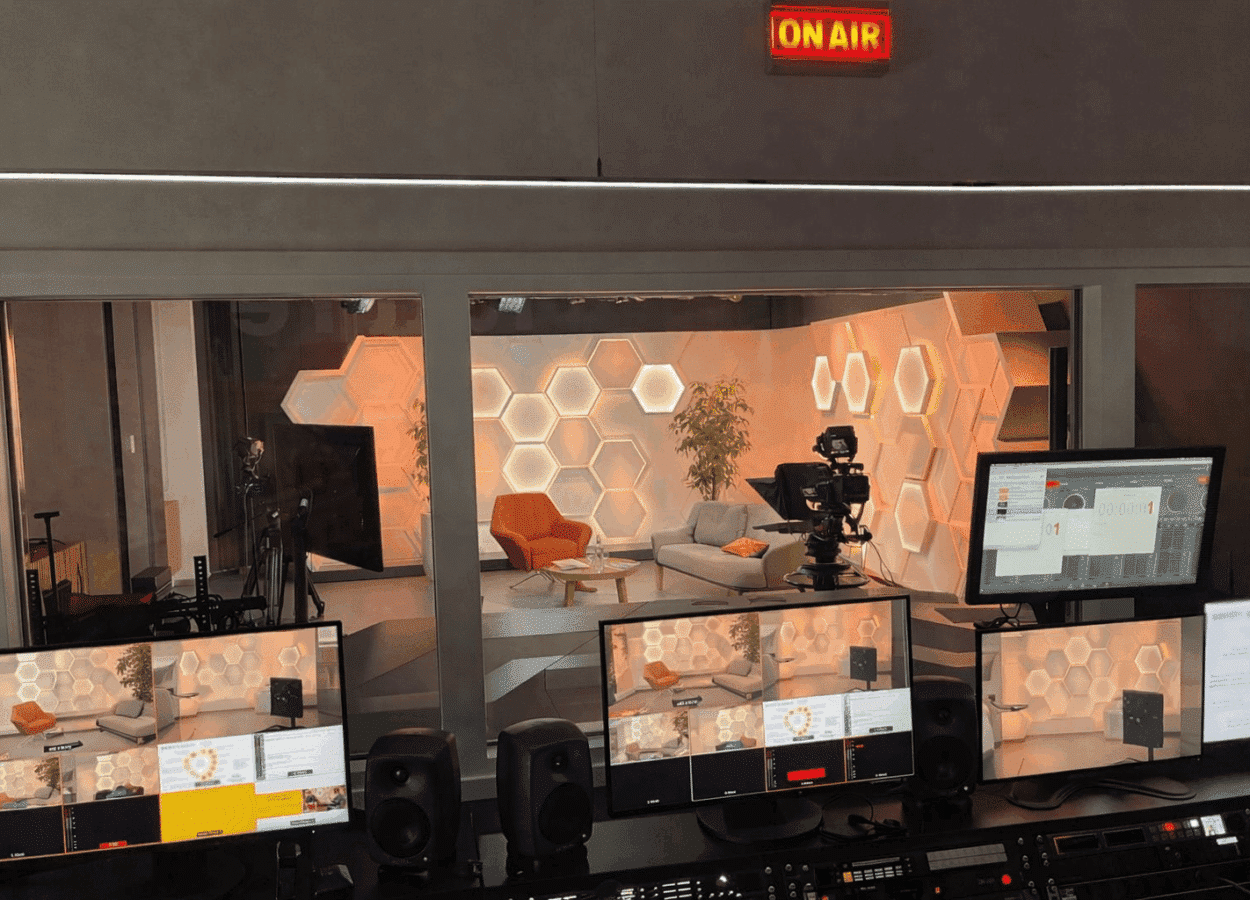
Within a live communication program, the studio does not function as a location but as an anchor point. A fixed studio environment provides:
- recognizability and continuity
- calm and confidence for speakers and teams
- control over risk and technology
- consistent brand expression
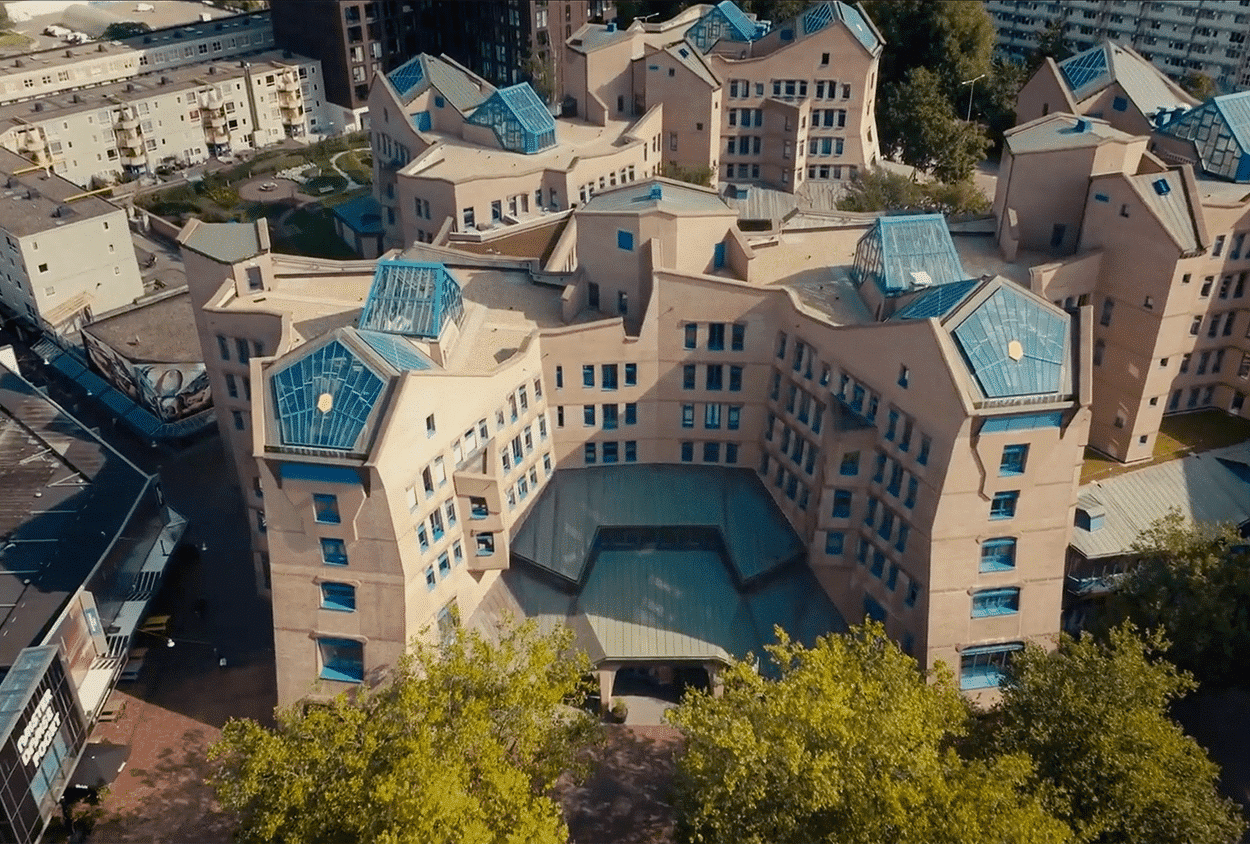
Studio Zandkasteel in Amsterdam is a professional studio designed around this principle. Not as a one-off event location, but as a permanent studio infrastructure for organizations that deploy live communication structurally.
From individual webinars to thought leadership programs
For organizations such as consultancy firms and knowledge institutions, live communication is closely linked to thought leadership. It is not a single broadcast that makes the difference, but repetition and build-up.
A programmatic approach makes it possible to:
- set up thematic series
- position expertise structurally
- build audiences over time
- link content and data
Live communication thus becomes an extension of the broader content and marketing strategy.
Data, governance and compliance as prerequisites
When live communication is deployed structurally, requirements also increase. Data, security and governance cannot depend on isolated tools or temporary arrangements.
That is why mature live programs work with:
- fixed platforms for registration and interaction
- controlled access and data flows
- clear responsibilities
- safeguarded information security (such as ISO 27001)
This is essential for organizations operating in regulated or reputation-sensitive environments.
Analytics as a learning tool within a live communication program
Structural live communication not only provides continuity in execution, but also insight into effectiveness. By organizing webinars and live broadcasts consistently within the same infrastructure, reliable data is created that organizations can learn from and steer on.
Analytics make visible:
- who registers for which sessions or themes
- which topics consistently generate interest
- where viewers drop off or remain engaged
- which questions are asked during live moments
By incorporating targeted questions and interaction moments during webinars and live events, deeper insight emerges into the needs, knowledge levels and concerns of different audiences. These insights can be used to refine formats, better align content and further develop communication programs in a focused way.
In a programmatic approach, live communication thus becomes not only a broadcast channel, but also a continuous source of feedback and audience insight.
One ecosystem, multiple contexts
A key advantage of programmatic thinking is scalability. Organizations do not always communicate from a single location.
A mature live strategy supports:
- broadcasts from a fixed studio
- from a central platform (for data enrichment)
- additional on-location sessions
- in-house studio setups
The strength lies in consistency across all these contexts. Studio Zandkasteel is part of such a broader ecosystem, where webinars, live events and studio communication come together under a single direction.
From supplier to structural partner
When live communication is set up programmatically, the nature of collaboration also changes. It is no longer about one-off productions, but about an ongoing relationship.
Organizations are no longer looking for a supplier, but for a partner who:
- thinks along on formats and rhythm
- safeguards processes
- delivers consistent quality
- grows along with the communication strategy
This is exactly the type of collaboration for which Studio Zandkasteel was developed.

A logical step for organizations that want to move forward
For organizations that deploy live communication on a monthly or recurring basis, the step toward a structural program is not a luxury, but a logical next phase.
It brings calm, predictability and strategic cohesion, and turns live communication into what it should be: a reliable instrument for knowledge sharing, positioning and trust.
Translating this into practice
Studio Zandkasteel in Amsterdam offers organizations a fixed studio environment to organize live communication programmatically. Combined with professional direction and a reliable webinar platform, this creates a scalable infrastructure for structural live communication.
Read more about the possibilities of Studio Zandkasteel as the core of a live communication program.
Frequently asked questions about structural live communication
What is meant by live communication as a program?
Live communication as a program means that organizations do not go live incidentally, but work with a fixed rhythm, fixed formats and a fixed infrastructure. This makes live communication a predictable and manageable part of the communication strategy.
Which organizations is a structural live communication program suitable for?
This model is particularly suitable for knowledge-driven, regulated or reputation-sensitive organizations that communicate regularly with employees, customers or stakeholders, such as consultancy, financial and public organizations.
Why is a fixed studio important within a live program?
A fixed studio provides consistency in appearance, technology and processes. This reduces risk, increases quality and ensures that the focus can remain on content rather than organization.
How does a live communication program relate to webinars and events?
Within a program, webinars and live events are not seen as isolated activities, but as formats within one cohesive communication model, supported by fixed direction and infrastructure.